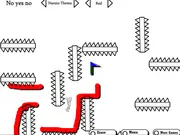
Soldiers Raid Osama
65,150 spilletider


Spilldetaljer
Hva handler Soldiers Raid Osama om?
Here are several strategies, ranging from practical steps to shifts in mindset:
1. Define the "Unknown": What exactly is unknown?
* Is it a lack of information/data? (e.g., "I don't know the exact market size.")
* Is it a lack of a clear solution? (e.g., "I don't know how to solve this problem.")
* Is it an unpredictable future outcome? (e.g., "I don't know what the user reaction will be.")
* Is it an unfamiliar concept or subject? (e.g., "I don't know anything about quantum physics.")
Clearly identifying the type of unknown will guide your approach.
2. Gather Information (Research & Inquiry):
* Ask Questions: Don't be afraid to ask for clarification, context, or more details. Talk to colleagues, mentors, subject matter experts. "What do we know about this already?" "Who might have insights?"
* Consult Resources: Search databases, books, academic papers, reputable websites, internal documentation. Leverage search engines effectively.
* Observe: Sometimes the unknown can be understood by simply paying close attention to its environment or related processes.
3. Break it Down / Simplify:
* Decomposition: If the unknown is a complex problem, break it into smaller, more manageable parts. Often, only a few sub-components are truly unknown, while others are familiar.
* Analogy: Can you relate this unknown to something you do know? Are there similar situations, systems, or problems you've encountered before?
4. Experiment & Test:
* Hypothesize: Formulate a hypothesis about what the unknown might be or how it might behave. "If X is true, then Y should happen."
* Small-Scale Trials: If feasible, run small, controlled experiments to test your hypotheses. This could be a pilot project, an A/B test, or a quick prototype.
* Iterative Approach: Take small steps, learn from the results, and adjust your course.
5. Risk Assessment & Mitigation:
* Identify Potential Impacts: What are the best-case, worst-case, and most-likely scenarios if this unknown plays out in different ways?
* Contingency Planning: What actions can you take to reduce negative impacts or capitalize on positive ones? Have a "Plan B" (and C).
* Build Redundancy/Flexibility: Design systems or plans that can adapt to different outcomes of the unknown.
6. Seek Diverse Perspectives:
* Brainstorming: Engage others in a brainstorming session. Different backgrounds and experiences can shed new light on an unknown.
* "Devil's Advocate": Intentionally challenge assumptions and explore alternative viewpoints.
7. Accept & Manage Uncertainty:
* Embrace It: Recognize that some unknowns cannot be fully resolved before action must be taken. This is particularly true in innovation or rapidly changing environments.
* Focus on Controllables: Shift your energy from the things you can't know or control to the things you can influence.
* Communicate Clearly: When presenting information, distinguish between what is known, what is assumed, and what remains genuinely unknown. Manage expectations.
* Develop Adaptability: Cultivate a mindset that is comfortable with ambiguity and ready to adjust as new information emerges.
8. Educate Yourself:
* If the unknown is a knowledge gap in a specific domain, dedicate time to learning that domain. Take a course, read a book, follow experts.
In essence, dealing with the unknown is often about transforming it into the "less unknown" or at least having a strategy for navigating the uncertainty it presents.
Can we play Soldiers Raid Osama on mobile?
No, Soldiers Raid Osama is designed for desktop play and works best on computers using a keyboard or mouse.
no
no
Kan vi spille Soldiers Raid Osama i fullskjermmodus?
Yes, Soldiers Raid Osama can be played in full screen mode for a more immersive experience.
Hvilke spill kan vi prøve neste gang?
Utforsk vår Terrorist-seksjon og oppdag populære titler som Stick Strike, Mission Commando, Urban Counter Terrorist Warfare og Police Assault - alle tilgjengelige for å spille umiddelbart på Y8 Games.
Kategori
Strategi og Forsvar Spill
Lagt til
23 jul 2011
Kommentarer